ESSAY · SHIBARI · PHOTOGRAPHY · PRACTICE
When a Beautiful Photograph Becomes a Trap
On shibari, photography, and the moment your own style starts suggesting the answer before you have time to look.
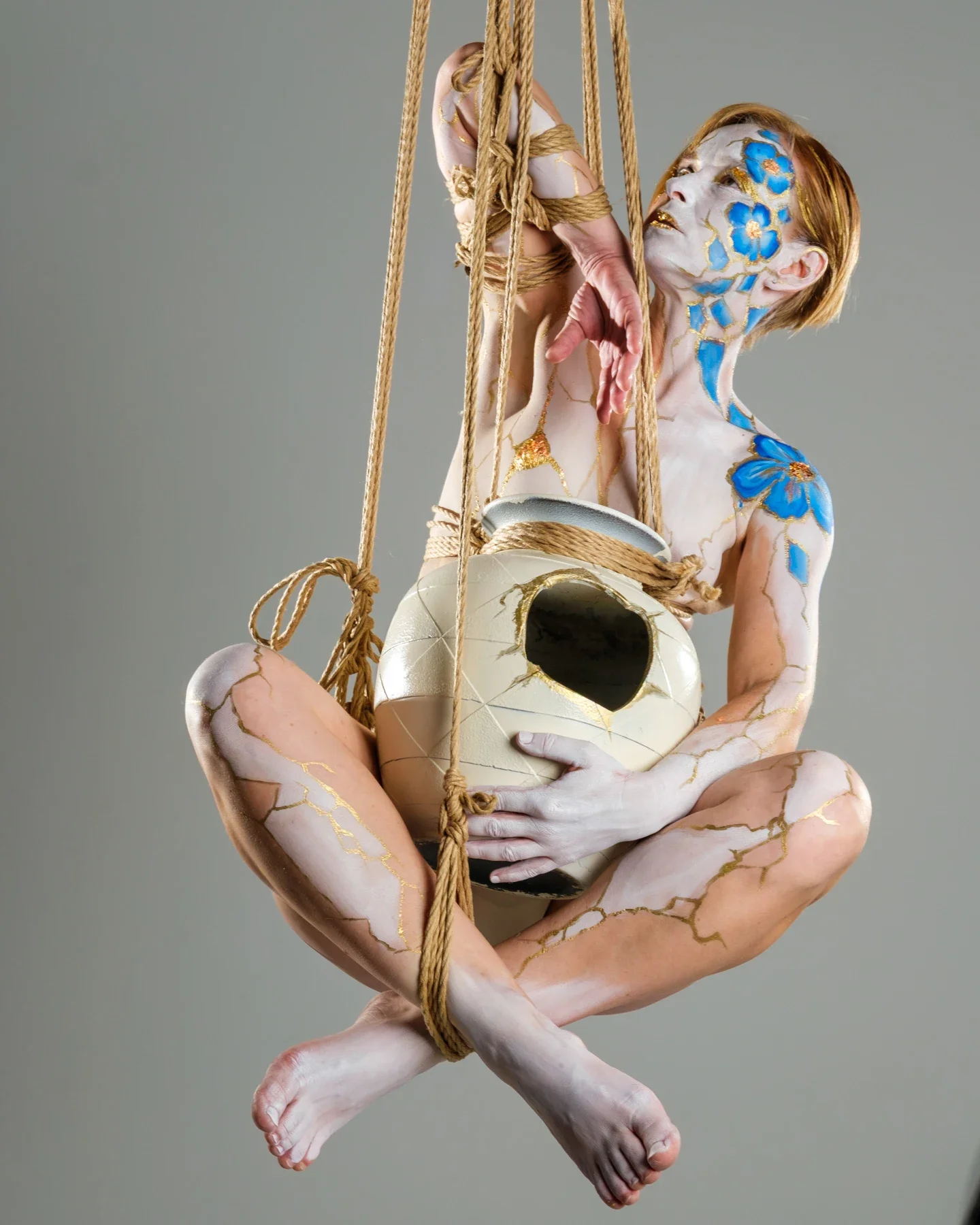
I caught myself asking a rather uncomfortable question. Have I become too good at making beautiful shibari photographs?
It started with someone else’s discussion of Annie Leibovitz’s photographs. People were talking about how a visual language, once found, can turn into a template. I won’t judge her work based on that conversation. But the question stayed with me: what happens when you already know how to get an image you like? Do you keep looking, or do you recognize your own result before you even press the shutter?
Beauty I create myself
Shibari is very photogenic. Rope sets lines and rhythms; the position of the body changes the space; light brings out volume, tension, and texture. The structure already has a strong visual presence. The camera can reveal it—or simply transfer it neatly into a photograph.
For me, the question is a little more complicated. I’m both a photographer and a rigger: I tie, interact with the person, and take part in creating what I later photograph. So it would be strange to say that I merely took advantage of ready-made beauty. We create it together. But I can steer things in a familiar direction twice: first by building the form I want, then by choosing the photographs where it looks the way I’m used to seeing it.
I have favorite ties, angles, and lighting choices. They recur, and gradually a style takes shape. I like recognizing my own work. Still, sometimes I want to check whether I recognized it too soon…
When form is the whole idea
I love sculptural images. Stillness, artifice, a fragment of a body without a face can all be deliberate choices. A photograph doesn’t have to tell someone’s life story or show everything that happened during a session. Sometimes what interests me is precisely how body, rope, and light come together as a form.
That’s why the thought experiment “if we replaced the person, would the photograph change?” doesn’t give us a ready answer. In one project, the irreplaceability of a particular person is essential. In another, I’m exploring a recurring structure, and its differences emerge through repetition. Even anonymity can be part of the work.
But I want to tell the difference between choosing this kind of artifice because the photograph needs it, and automatically removing everything that gets in the way of a familiar pattern. The results may look very similar. Both may be beautiful.
A good session, a strong photograph, a faithful realization of an idea, and content that feels new to me are four different questions. They’re connected, but success at one doesn’t answer the others. I can’t know someone’s whole experience from their expression in a photograph. And my interest in the final image doesn’t replace their own relationship to what happened between us.
What changes in a photograph imagined in advance
In The Shape of a Break, we had a vessel, body painting, and rope. We found the vessel discarded and painted it, drawing on the visual language of kintsugi (金継ぎ). This is paint for the project, not a traditional repair with urushi (漆) lacquer. Diana carried the idea of a visible seam onto Tiana’s skin, while I worked with rope and light.
The resemblance between the lines was clear in advance: the golden pattern, the curve of the body, the rope. You can already build an expressive photograph from that. But Tiana held the vessel, shifted her weight, changed the position of her shoulder and hand. The painting affected the tie, the tie affected the pose, and the pose affected the next frame. I had to rethink what I’d planned to do.
And the staging came to hold more than a resemblance between materials. The vessel remains, the paint washes away, the rope marks disappear, while the photograph holds them beside one another. This is a carefully conceived project. Its meaning doesn’t depend on our accidentally catching some especially “real” moment.
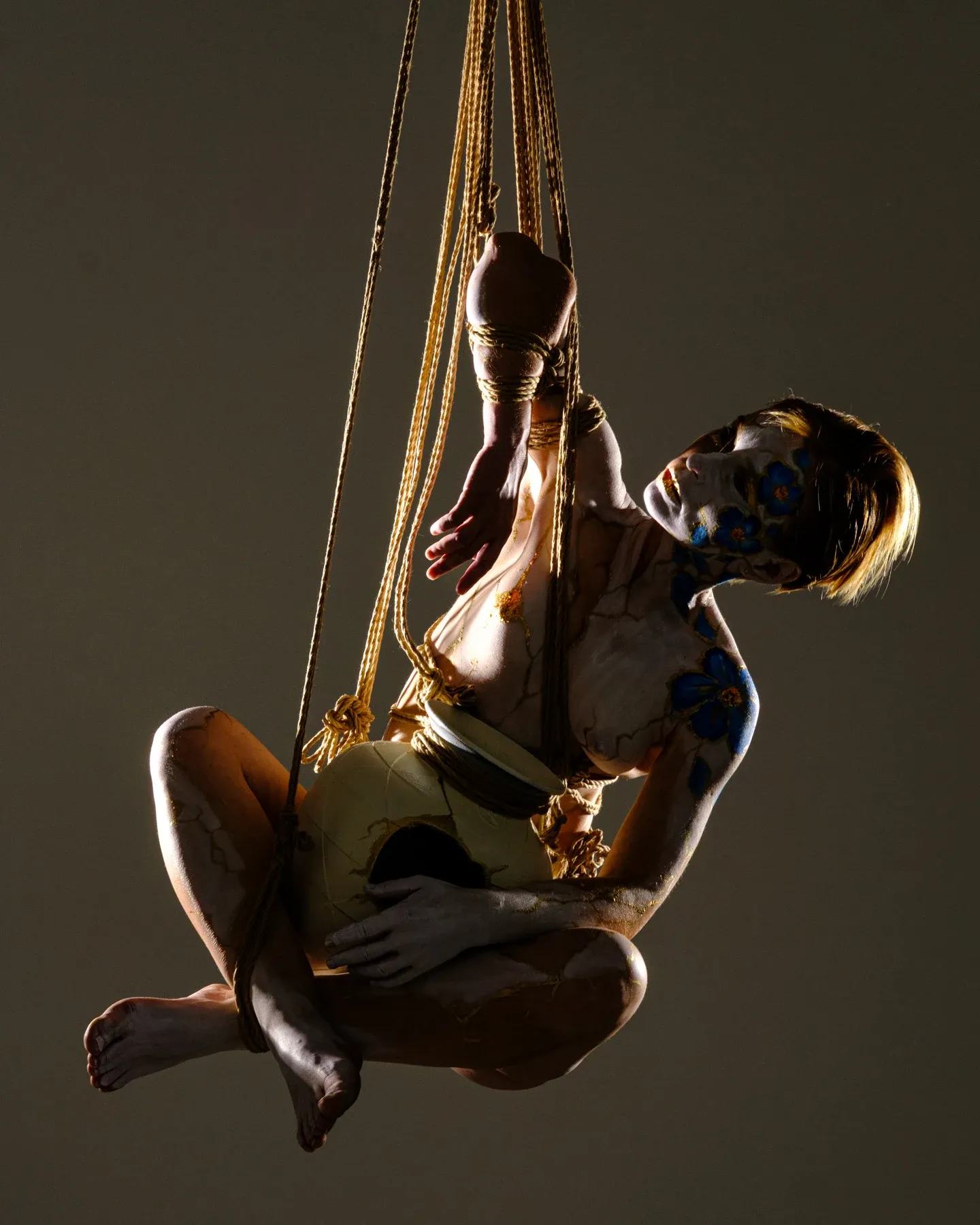
“The Shape of a Break.” Part of the structure stays in shadow; the vessel, face, and hand become visible before the rest.
In the project text, I refer to ma (間) when thinking about the distance between forms, and to yūgen (幽玄) when an image reveals itself only in part. These are ways of looking more closely at my own work, not a claim that it belongs to a Japanese tradition. But an empty interval or a half-dark frame can also become a familiar device. The word itself adds nothing to the photograph. I still have to look: what is this distance doing here, and why does this image need this shadow?
Just as I wanted it. And as I didn’t expect
When I select photographs, I have at least two reasons to linger over a frame. It came out just as I imagined. Or something appeared in it that I didn’t expect. Sometimes it’s the same photograph: the structure worked, and because of it I saw something else.
Unexpectedness on its own doesn’t guarantee much either. An awkward gesture may remain an awkward gesture. Unusual light may distract. Chance and imperfection can easily become their own carefully repeatable aesthetic.
And discovery doesn’t have to happen while shooting. I may have found it while imagining the setup, or later, comparing several photographs. Sometimes a recurring form lets me notice a difference I would have missed in a completely new image. I don’t want to turn novelty into another requirement: surprise yourself every time, or the work was wasted.
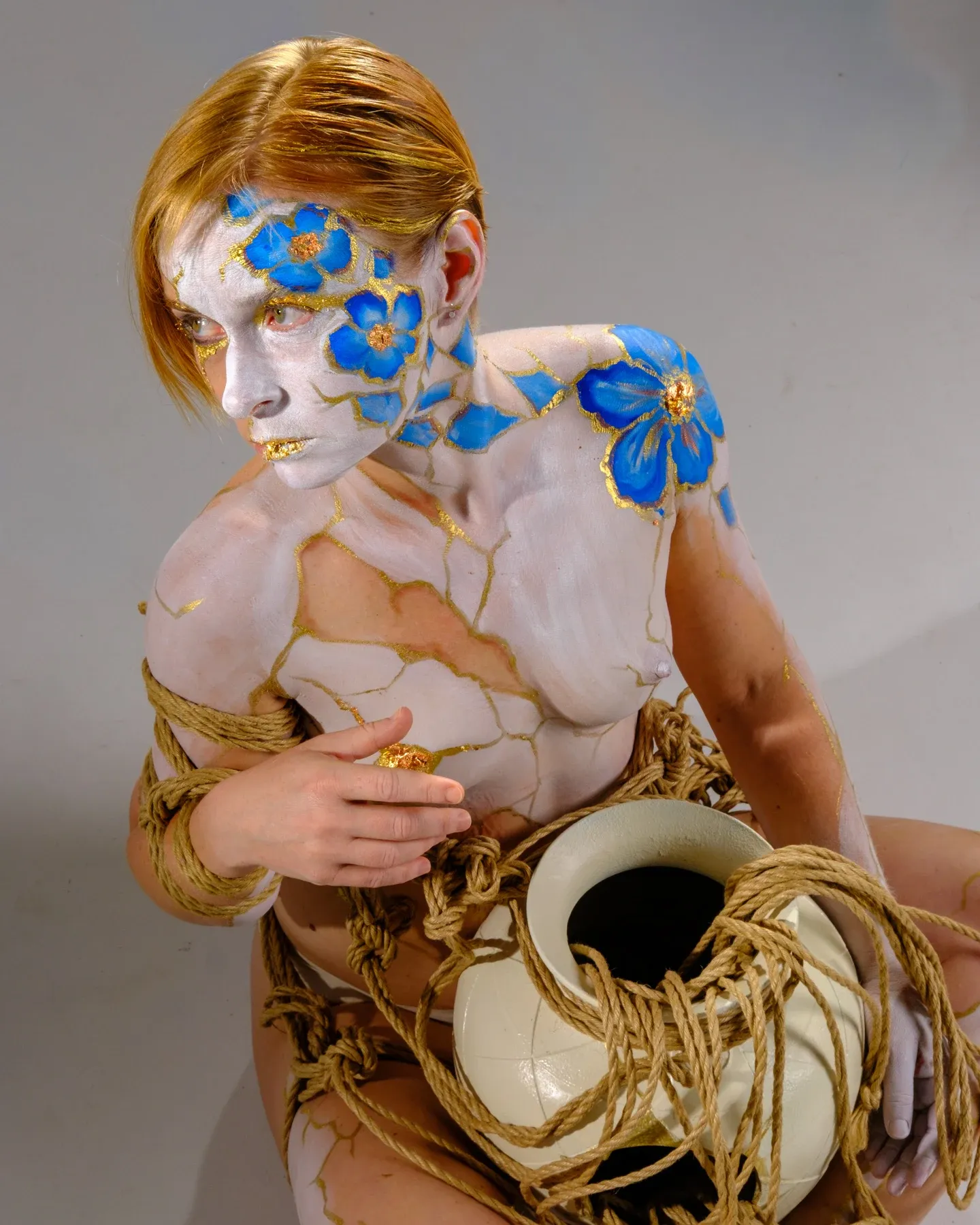
The same series, a different arrangement of the body and hands. This frame doesn’t prove that a less sculptural image is more honest. I’m interested in how my gaze changes as I move from one photograph to another.
All three photographs here are from “The Shape of a Break.” Concept, shibari, and photography: Roman / Ded Mazai; body art: Diana Yanvareva; model: Tiana Nephila.
What I leave outside the frame
I think the most uncomfortable part of the question comes during selection. A person and a session may have changed my work. But if I later keep only what fits my familiar aesthetic, the viewer won’t see that difference. And it’s easy for me to tell myself I simply chose the best photographs.
In “Who Will Be the Model?”, I wrote about why even a familiar session feels new to me every time. I want to continue that thought here: if the experience changed, what part of it did I decide to preserve in the image? And why?
I wouldn’t want new people and new encounters to matter only because they can produce one more recognizable image. But I’m not going to give up recognizability either. For now, I’m looking for a sign: can what’s happening still change my answer? Or do I know so well what I want to get that everything else passes me by?
The viewer may have a completely different answer. A photograph that feels familiar to me may reveal something to them for the first time. My unexpected discovery may not hold their attention at all. I’m interested in that difference—especially in what people who find themselves in front of the camera, and on the other side of the rope, have to say.
When does a style become self-repetition for you? Try to think of a particular photograph: what made you return to it after your first reaction, “beautiful”?
If you’d like to discuss it, write to me on Facebook. I’ll come back to this question.